Citizen Scientists Sought to Catalog Rare Overlapping Galaxy Pairs for Dust Studies
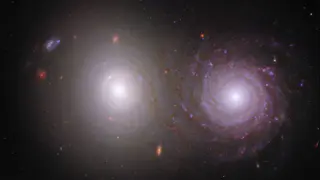
NASA has launched the Overlap Zoo citizen science project inviting volunteers to identify and classify pairs of galaxies that appear to overlap when viewed from Earth or space telescopes. When two galaxies align from Earth's perspective, dust in the nearer galaxy creates silhouettes against the more distant galaxy, allowing astronomers to map dust distribution and understand how it affects starlight. Volunteers will help build the first comprehensive catalog of overlapping galaxy pairs to advance astronomical research and improve distance measurements to distant cosmic objects.
Overlapping galaxies represent a fortunate cosmic alignment that transforms observation into scientific opportunity. When two galaxies appear to stack from Earth's vantage point, the intervening dust becomes visible as a natural filter, revealing patterns that would otherwise remain invisible. This phenomenon enables researchers to create detailed maps of how dust disperses across galactic structures and influences the passage of light across the universe.
The Overlap Zoo initiative builds on established citizen science frameworks by distributing the labor-intensive task of image verification across a global volunteer network. Rather than requiring specialized astronomical training, participants receive guidance within the platform itself, democratizing the classification process. This approach addresses a practical bottleneck: as observational data accumulates from advanced telescopes, human identification and categorization of candidate galaxy pairs has become a significant constraint on research progress.
This citizen science project may democratize participation in astronomical research while potentially accelerating cosmic distance calculations that inform our understanding of the universe's scale and structure. Volunteers could gain familiarity with data interpretation methods applicable beyond astronomy. The resulting galaxy pair catalog might improve astronomical models used in cosmology and physics. However, the initiative's broader societal impact likely remains limited to academic and educational communities unless findings substantially reshape public understanding of cosmic phenomena or inspire increased STEM engagement.