Historic Home Transforms Into Bold Maximalist Showcase With Color and Vintage Treasures
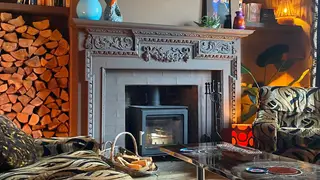
Stuart Eminson converted his 1890 United Kingdom home from a stark white empty space into a richly layered maximalist interior filled with saturated colors, vintage finds, and distinctive pieces including pink Murano chandeliers and tiger-print upholstery. The homeowner views his residence as a personal reflection, intentionally filling the 1,280-square-foot space with items collected over years, including heirlooms passed down from family members. The eclectic design approach demonstrates how personal style and bold color choices can completely reimagine a historic property.
Stuart Eminson and his partner Steve transformed their early 1890s Southport home over nearly five years of ownership, moving away from the minimalist aesthetic they inherited. The residence showcases an intentional curation of pieces spanning multiple decades, from inherited vintage items to contemporary finds, unified through dramatic paint choices and strategic lighting design. Their approach demonstrates how layered, eclectic interiors can develop organically through personal collecting and creative risk-taking rather than following conventional design rules.
The couple's practical innovations, including smart home technology to manage their extensive lamp collection, reveal how maximalist design requires thoughtful problem-solving. Their use of eco-conscious paint brands alongside vintage furnishings suggests that bold interior design can align with sustainability values, challenging assumptions that maximalism and environmental responsibility are incompatible approaches to home decoration.
This home renovation narrative could influence readers' confidence in pursuing unconventional decorating choices, potentially shifting perceptions of maximalism from excess toward personal expression. The story may resonate particularly with individuals interested in vintage collecting and sustainable design practices, while encouraging homeowners to view their spaces as extensions of identity rather than neutral backdrops. Such accounts might contribute to broader conversations about rejecting mass-market homogeneity in favor of individually curated environments, though accessibility varies based on resources for sourcing and storing vintage collections.