Why AI-Generated Work Creates More Tasks Than It Solves: A Four-Step Framework for the AI Era
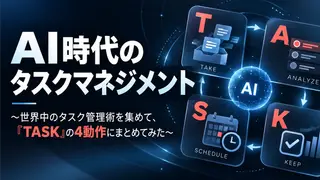
A productivity guide argues that while AI excels at generating initial drafts (50% completion), it paradoxically increases workload by flooding workers with incomplete outputs that still require human refinement to reach publishable quality. The author proposes a four-step framework called TASK—ToDo (capture), Arrange (prioritize), Sprint (execute focused time), and Kaizen (review)—where AI handles the first and last steps effectively, but humans must master the middle steps of deciding what to complete and blocking time to finish work. The core insight is that output speed has increased while completion capacity remains unchanged, creating a bottleneck at the refinement stage.
The article draws on a 2024 Upwork survey showing that 77% of workers using AI report increased workload rather than decreased, challenging the widespread assumption that these tools enhance productivity. The bottleneck occurs because AI excels at generating preliminary outputs—estimated at 50% completion—but humans retain responsibility for the final refinement stages that require contextual judgment, verification, and alignment with organizational priorities and client expectations. This speed differential creates an accumulation problem where incomplete drafts arrive faster than they can be processed.
The TASK framework synthesizes established productivity methodologies including GTD, the Eisenhower Matrix, Pomodoro, and Kanban into a four-step sequence. The author argues that AI effectively handles the initial capture phase and the final review phase, but the critical middle steps—deciding which items merit completion and protecting uninterrupted time for execution—remain exclusively human domains requiring deliberate decision-making that AI cannot replicate.
This analysis could reshape how organizations integrate AI into workflows, potentially shifting focus from tool adoption toward human process discipline. Workers and managers may recognize that simply acquiring AI capabilities without redesigning task management creates efficiency illusions rather than genuine productivity gains. The framework could influence training programs and workplace practices by emphasizing that technological acceleration in some phases requires corresponding human skill development in prioritization and time-blocking to prevent bottleneck formation.