Hybrid Robot ALBATROSS Masters Flight, Sailing, and Aquatic Navigation in Single Design
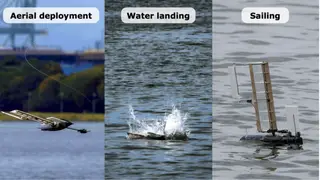
Engineers at Singapore University of Technology and Design created ALBATROSS, a multi-modal robot that combines biological inspiration from maple seeds, swans, and fish to perform tasks no single animal can accomplish. The device can be deployed from aircraft, glide down to water using rotating wings, then transform into an autonomous sailboat with a fish-like rudder system to conduct extended ocean monitoring. The innovation demonstrates how engineers can extract useful functional components from nature and recombine them in ways evolution never produced, creating a machine ideally suited for rapid deployment to remote marine environments during emergencies.
The ALBATROSS design solves a practical problem in marine research: traditional methods for gathering urgent ocean data require either deploying crewed vessels or using equipment that only works effectively in one environment. By combining aerodynamic principles from seeds, locomotion concepts from waterfowl, and steering mechanisms inspired by aquatic animals, engineers created a system where components serve multiple purposes. The robot's rotating limbs function both as descent-control mechanisms during deployment and as sails during water-based operations, eliminating redundant parts that would increase weight and failure points.
During testing at Singapore reservoirs, the robot demonstrated the effectiveness of this hybrid approach. When released from nearly 500 feet altitude, the device's spinning action reduced landing impact forces significantly, protecting onboard sensors and equipment. The system then automatically transitioned to autonomous sailing mode, capable of conducting extended monitoring missions without human intervention or additional setup.
ALBATROSS could advance emergency response capabilities for marine disasters by enabling rapid deployment of sensing equipment to remote locations without infrastructure or personnel safety risks. The robot's efficiency—achieved through simplified, multi-functional design—may reduce operational costs for ocean monitoring agencies. However, widespread adoption would depend on further testing in actual emergency conditions and potential regulatory frameworks around autonomous maritime systems. The broader impact may extend to how engineers approach bio-inspired engineering, potentially influencing future designs across robotics and aerospace sectors.