Deploying Intelligence at Device Edges Requires Integrated Infrastructure Strategy
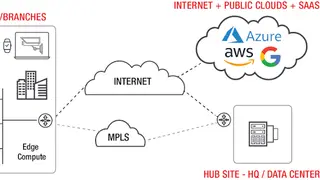
Decentralizing AI processing from cloud data centers to edge devices enables faster decision-making, improved privacy, and reduced network traffic, though success demands careful infrastructure planning including deployment, monitoring, and lifecycle management. Security, power efficiency, memory architecture, and connectivity must be engineered into edge systems from initial design rather than addressed afterward as these devices assume greater autonomous decision-making responsibilities. Edge AI is expanding rapidly across consumer electronics, industrial systems, vehicles, and medical devices as smaller language models make localized processing increasingly practical.
The shift toward localized AI processing represents a fundamental change in how computing systems handle information. Rather than sending all data to centralized cloud infrastructure for analysis, edge devices perform intelligent operations at their point of origin—whether in a smartwatch monitoring health metrics, an industrial sensor detecting equipment anomalies, or vehicle components processing visual information from cameras and lidar systems. This architectural change addresses multiple technical and practical challenges simultaneously.
The successful deployment of edge AI extends beyond simply moving algorithms to smaller devices. Organizations must establish comprehensive systems for initial deployment, continuous monitoring, and long-term maintenance of these distributed systems. Critical design decisions around security protocols, power consumption, memory allocation, and network connectivity cannot be retrofitted after deployment; they must be integrated during the initial engineering phase as these devices assume greater responsibility for autonomous decision-making without constant cloud oversight.
Edge AI deployment could reshape infrastructure investments across multiple industries, potentially benefiting organizations through reduced latency, improved data privacy, and lower energy consumption compared to cloud-dependent models. However, the complexity of managing distributed intelligent systems may create new challenges in security, standardization, and operational oversight. The transition could affect how enterprises allocate resources between centralized and localized computing, potentially altering workforce requirements for infrastructure management and system monitoring across consumer, industrial, medical, and automotive sectors.