China to Produce AI-Generated Martian Geology Map Ahead of 2028 Sample Return Mission
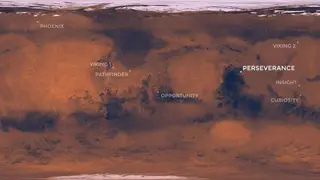
China plans to complete an artificial intelligence-powered geological map of Mars by 2028 to support its upcoming Tianwen-3 sample return mission. The map will leverage data collected by China's Zhurong rover and orbital instruments from previous Mars missions, compiling over 940 gigabytes of information. This effort aims to identify optimal landing sites and represents a significant advancement in planetary exploration methodology.
China's Tianwen-3 mission represents an escalation in the nation's Mars exploration capabilities, building directly on successes from the Zhurong rover and orbital instruments deployed during the earlier Tianwen-1 mission. The compilation of over 940 gigabytes of collected data into an intelligent geological map positions China to make informed decisions about where to land its sample-retrieval spacecraft, narrowing possibilities from an initial 80 candidate sites down to just three finalists by 2026.
The AI-generated map methodology may establish a new standard for planetary cartography. By contrast, previous geological mapping relied on manual analysis of orbital imagery. If successful, China's approach could accelerate how quickly scientists process vast datasets from other celestial bodies, potentially influencing methodologies across international space programs.
The advancement of Mars sample-return technology could reshape planetary science by providing fresh geological material for laboratory analysis, potentially answering fundamental questions about Mars's past habitability. Success might strengthen China's competitive position in space exploration and encourage other nations to accelerate similar missions. Additionally, the development of AI-driven mapping techniques could reduce costs and timelines for future missions to the Moon, asteroids, and beyond, democratizing access to sophisticated planetary exploration methodologies across the global scientific community.