Nancy Grace Roman Space Telescope's Coronagraph Instrument Captures First Light from Distant Stars
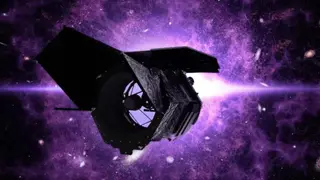
The Coronagraph Instrument aboard NASA's Nancy Grace Roman Space Telescope successfully captured its first images on September 22, observing stars in the Large Magellanic Cloud during initial test observations. The instrument demonstrated the ability to produce focused images and passed crucial guidance system tests that verified its ability to maintain precise astronomical targeting. These early results mark the beginning of a systematic testing program designed to prepare the coronagraph for its primary mission of detecting faint exoplanets and debris disks.
The Nancy Grace Roman Space Telescope represents a significant advancement in observational astronomy, equipped with specialized instruments designed to tackle fundamental questions about the universe. The Coronagraph Instrument's primary objective centers on detecting exoplanets and debris disks around distant stars—objects that are extraordinarily difficult to observe because they are overwhelmed by the brightness of their host stars. By blocking out this starlight, the coronagraph creates conditions necessary for identifying these faint celestial bodies.
The successful completion of initial testing demonstrates that Roman's guidance and imaging systems function as engineered. The fine-guidance system's precision—comparable to focusing a laser on a coin from 150 miles away—is essential infrastructure enabling both the Coronagraph and Wide Field Instrument to maintain stable observations. These September tests represent early validation phases in what NASA describes as a methodical preparation process before the instrument begins its primary scientific mission.
Roman's coronagraph capabilities could substantially enhance humanity's understanding of planetary formation and the prevalence of exoplanets throughout the galaxy. Success in this mission may yield data relevant to questions about habitability and the distribution of planets across cosmic distances. The findings could inform long-term space exploration strategies and deepen scientific knowledge of our place in the universe. Additionally, such technological achievements may inspire continued investment in space-based observatories and influence educational interest in astronomy and engineering fields.