U.S. Stock Markets Close Mixed as Tech Gains Offset Rate Pressures
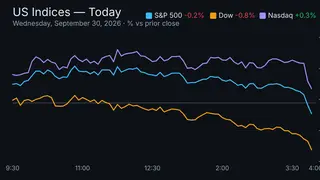
U.S. equity markets finished with mixed results on September 30, with the Nasdaq rising 0.24% while the Dow Jones fell 0.86% amid elevated Treasury yields near 5.24%. Technology and machinery sectors led gains fueled by AI optimism and Boeing's $20 billion Navy contract, while rate-sensitive sectors like residential construction and insurance suffered significant declines. The market absorbed positive economic data including a 2.2% GDP revision and moderate inflation readings, though growth concerns pushed volatility higher late in the session.
Wednesday's market activity reflected competing forces in the broader economy. While technology stocks benefited from sustained artificial intelligence enthusiasm and a major defense contractor secured significant government funding, financial conditions tightened considerably. The Federal Reserve's implicit rate environment, signaled by Treasury yields hovering above 5.2%, created headwinds for industries dependent on borrowing—particularly residential construction and insurance companies, which posted losses exceeding 3%. Economic indicators remained mixed; job creation outpaced expectations while inflation stayed moderate, leaving investors uncertain about the path forward.
The divergence between sectors highlighted the uneven nature of current market conditions. Companies in capital-intensive, rate-sensitive industries faced mounting pressures, while technology firms and those tied to government spending initiatives captured investor attention. This selectivity suggests market participants are increasingly distinguishing between businesses that can thrive in a higher-rate environment and those requiring cheaper financing to function profitably.
Mixed market signals may influence consumer and business confidence going forward. Higher Treasury yields increase borrowing costs for homebuyers and construction firms, potentially cooling housing demand and employment in related sectors. Conversely, technology sector strength and defense spending could support job creation in those industries. The outcome depends partly on whether elevated rates persist or ease, which would materially affect household decisions about major purchases and corporate investment plans across the economy.