Former Congressional Staffers Use Pop Culture to Make Gerrymandering Accessible to Mainstream Audiences
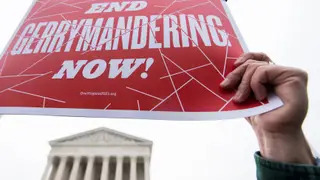
Two former congressional staffers published a book titled "Draw the Line in Ohio" that uses pop culture references, including the film "Mean Girls," to explain gerrymandering and congressional redistricting to general audiences. The authors argue that while redistricting may seem arcane, the topic deserves public attention because gerrymandering drives political corruption beyond its obvious role in determining which party controls Congress. The bipartisan collaboration between a former Republican staffer and Democratic communications director demonstrates that opposition to gerrymandering transcends party lines.
The book uses entertainment references as a pedagogical tool to overcome public disengagement with redistricting policy. By anchoring complex concepts in familiar cultural touchstones ranging from 1990s television to contemporary reality programming, the authors seek to lower barriers to understanding how district boundary manipulation affects political outcomes and governance. The strategy reflects their belief that substantive policy discussion need not employ exclusively technical language to reach broader audiences.
Topping and Rultenberg's collaboration represents a notable instance of cross-partisan cooperation on electoral reform. Despite their different party affiliations during their congressional careers, both authors now identify as independents, suggesting that gerrymandering opposition may constitute common ground among those with varied political perspectives who share concerns about institutional accountability and democratic representation.
This book project could influence how advocacy organizations approach public education on redistricting, potentially demonstrating that accessible communication methods enhance civic engagement on structural political issues. By lowering comprehension barriers, such approaches may enable more voters to evaluate redistricting outcomes in their own communities and participate in related policy debates. The model could affect whether gerrymandering becomes a sustained concern for mainstream audiences or remains peripheral to electoral discourse.