Investment conflicts create challenges for Pacific island governance
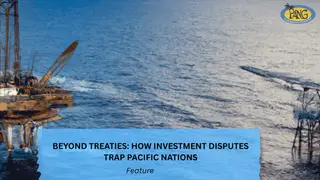
Pacific island nations, which manage approximately 30 percent of the world's oceans and seas, face significant challenges from investment disputes that complicate their policy decisions. These legal and commercial conflicts operate alongside treaty frameworks, creating additional constraints on island sovereignty. The disputes highlight structural vulnerabilities in how smaller nations navigate international commerce and development agreements.
Pacific island nations occupy a position of significant maritime responsibility, controlling access to roughly one-third of global ocean and sea resources. However, this geographic advantage comes with vulnerabilities. When investment disputes arise—whether involving resource extraction, infrastructure projects, or trade agreements—these smaller nations find themselves navigating complex legal terrain while simultaneously managing obligations under international treaties. The competing demands of attracting foreign capital for development and protecting sovereign interests create difficult policy situations with limited institutional capacity to resolve them effectively.
These governance challenges may affect multiple stakeholders: island communities could experience delayed development projects or constrained policy flexibility; foreign investors may face uncertainty in dispute resolution; and regional stability could be influenced by how nations manage conflicting obligations. The situation highlights how smaller nations with substantial natural resource control may struggle to convert that advantage into sustainable benefits when facing asymmetric legal and commercial pressures from larger economies and multinational entities.