Armed Gangs Control Haiti's Capital as UN-Authorized Force Attempts to Restore Order
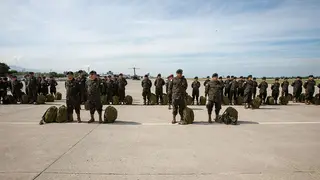
Haiti's capital, Port-au-Prince, remains under the control of armed gangs occupying as much as 90 percent of the city, with violence extending into agricultural regions as gangs expand territorial reach. The United Nations has documented over 3,000 killings in the first half of 2026, prompting authorization of a multinational Gang Suppression Force of up to 5,550 personnel, though deployment has proceeded only partially. Haiti faces a governance vacuum with no elected officials at the national level since 2016, while a caretaker administration prepares for the country's first national election in a decade.
Haiti's security deterioration represents a fundamental collapse of state authority rather than organized political conflict. The assassination of President Moïse in 2021 triggered a cascade of institutional failures, leaving the country without elected leadership for a decade. Prison breaks in 2024 flooded the capital with armed individuals, while simultaneous airport closures demonstrated gangs' capacity to paralyze essential infrastructure and isolate the nation from external support.
The demographic scale of the crisis compounds these challenges significantly. With nearly 12 million residents dependent on a state apparatus that no longer functions, the violence extends beyond territorial control into economic survival. Agricultural regions now experience gang activity, threatening food production and rural livelihoods. The upcoming election represents Haiti's first opportunity for democratic governance renewal since 2016, yet occurs amid unprecedented criminal consolidation of power.
The gang crisis threatens Haiti's civilian population through direct violence and systemic breakdown affecting access to food, healthcare, and mobility. Diaspora communities and international investors face uncertainty regarding safety and economic viability. The partial deployment of the UN-authorized force may prove insufficient to reverse gang entrenchment, potentially prolonging humanitarian deterioration. Electoral success depends partly on whether security improvements allow voting participation, creating interdependence between international intervention outcomes and democratic legitimacy.