Design Innovation and Community Engagement Reshape Public Perception of Data Centers
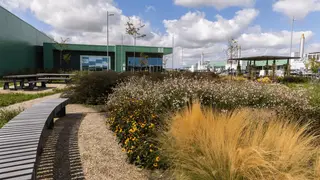
Data center operators are adopting biomimicry principles, collaborative community design processes, and brownfield site redevelopment strategies to minimize visual and environmental impact. These architectural and planning approaches aim to address local opposition and increase neighborhood support for new facilities. The shift toward more aesthetically integrated and community-responsive facilities represents a broader industry effort to improve social license to operate.
The data center industry faces mounting local resistance to facility development, prompting operators to reconsider how their infrastructure integrates with surrounding communities. Beyond traditional efficiency metrics, companies are now prioritizing visual integration and environmental stewardship as competitive advantages. This includes studying natural systems for design inspiration, involving residents in planning phases, and converting underutilized industrial sites rather than expanding into greenfield areas. These multifaceted approaches reflect recognition that operational success increasingly depends on maintaining positive relationships with neighboring populations.
This shift could reshape how technology infrastructure gains approval and funding in populated regions. Communities may experience reduced opposition to data center projects, potentially accelerating cloud service expansion in areas previously resistant to such facilities. Operators could gain faster permitting timelines and lower project costs through improved public acceptance. Conversely, the strategy may signal that industry practices previously faced legitimate environmental and aesthetic concerns, raising questions about whether design improvements address root issues or primarily serve public relations objectives.