Nuclear Energy Startups Attract Record Private Investment While Public Valuations Stumble
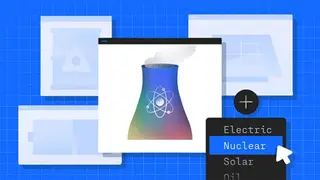
Nuclear-focused startups have secured more than $6 billion in funding during 2026, surpassing all previous years as investors anticipate increased energy demand from artificial intelligence deployment. Commonwealth Fusion Systems and Valar Atomics each raised $1 billion this year, contributing to historically high funding activity in the sector. However, recent IPO debuts including X-energy, Standard Nuclear, and Deep Fission have seen share prices decline substantially from their initial valuations, signaling weakening public market confidence despite strong private investment momentum.
The nuclear sector's funding surge reflects investor confidence that next-generation reactor designs will help meet electricity demands driven by artificial intelligence infrastructure expansion. Commonwealth Fusion Systems and Valar Atomics led this wave with billion-dollar raises, while numerous other companies secured substantial backing to advance both fusion and fission technologies. Projects are progressing across multiple U.S. states, with small modular and micro reactors in active development or planning phases.
The divergence between private and public market performance highlights investor uncertainty about execution timelines and commercial viability. Several companies that went public at valuations exceeding $1 billion have since experienced significant share price declines, suggesting the market may be reassessing whether near-term returns justify current valuations. This disconnect could indicate caution about regulatory approval speeds and the capital intensity of scaling these technologies.
The trajectory of these nuclear startups could meaningfully influence energy infrastructure and electricity availability for data centers and AI systems. If privately-backed companies successfully commercialize next-generation reactors, they may enable decentralized power generation and reduce reliance on traditional grids. Conversely, if public market skepticism reflects genuine technical or regulatory obstacles, delayed deployments could constrain AI expansion plans. Communities hosting proposed reactor sites may experience both economic opportunity and local opposition regarding safety and environmental concerns.