Marine creature biomimicry offers design insights for underwater vehicle engineering
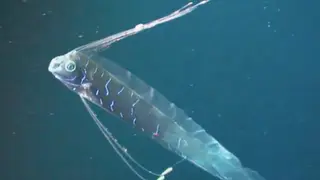
Researchers are studying deep-sea organisms to develop quieter and more efficient submarine and underwater robotics designs. The unusual characteristics of deep-ocean fish species provide biological models for stealth technology and ocean monitoring equipment. This biomimetic approach bridges marine biology with engineering innovation to advance underwater vehicle capabilities.
Scientists are turning to nature's deep-sea inhabitants as inspiration for creating more advanced underwater technology. By examining how organisms adapted to extreme ocean depths function, researchers can identify biological principles applicable to submarine construction and robotic exploration systems. This interdisciplinary collaboration leverages millions of years of evolutionary optimization to solve contemporary engineering challenges.
The biomimetic strategy focuses particularly on stealth capabilities and operational efficiency—two critical factors for underwater vehicles used in marine research and monitoring. By understanding how deep-sea creatures move silently through water and conserve energy in resource-scarce environments, engineers can translate these survival mechanisms into practical design improvements for their mechanical counterparts.
This research could benefit multiple sectors reliant on underwater technology, including oceanographic research institutions, naval operations, and environmental monitoring programs. Improvements in submarine stealth and efficiency may enhance scientific data collection about marine ecosystems while potentially reducing the operational costs of undersea missions. Advances in this field could also extend to commercial underwater exploration and renewable energy applications, though widespread implementation would depend on successfully translating biological models into scalable engineering solutions.