New physical AI model enables robots to perform complex tasks at human-comparable speeds
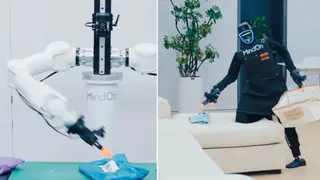
MindOn introduced its Mind-1 physical AI model, which enhances robotic systems' ability to execute everyday tasks with performance approaching human capabilities. The model represents an advancement in how artificial intelligence controls physical robotic movements and decision-making in real-world environments. This technology could improve autonomous systems' practical applicability across various industrial and service applications.
The introduction of Mind-1 represents a significant development in the field of robotic automation. This physical AI model addresses a longstanding challenge in robotics: enabling machines to perform routine operations with efficiency comparable to human workers. By improving how artificial intelligence interprets and controls physical movements in unpredictable real-world conditions, the technology bridges a gap between laboratory demonstrations and practical deployment.
The potential applications span multiple sectors where automation could enhance productivity. Manufacturing facilities, logistics centers, and service industries represent key areas where such advances could prove valuable. The achievement of near-human performance speeds suggests meaningful progress toward robots that can adapt to varied tasks without extensive reprogramming, potentially expanding the scope of automation beyond highly controlled environments.
This advancement could influence labor markets and workplace organization across sectors relying on manual and semi-skilled tasks. Workers may face both displacement risks in routine operations and opportunities in roles supervising or maintaining advanced systems. Manufacturers and service providers could see improved efficiency and reduced operational costs, while consumers might benefit from faster, more reliable automated services. Broader societal outcomes may depend on how organizations implement these systems and whether workforce transition support accompanies technological adoption.