Semiconductor Leaders Post Mixed Results as AI Boom Lifts Chip Designers While Equipment Makers Struggle
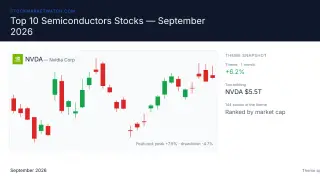
Semiconductor stocks showed divergent performance in September 2026, with the theme up 6.2% for the month as AI-related demand continues to drive the sector. Nvidia leads the complex at $5.5 trillion market capitalization with a 3.4% monthly gain, while companies like AMD and Intel posted stronger monthly returns of 30% and 34.3% respectively on year-to-date momentum. Equipment and materials suppliers like Applied Materials and Lam Research faced headwinds with negative three-month returns despite solid year-to-date gains.
The semiconductor sector's September 2026 performance reveals a stark divergence in fortunes across the supply chain. While chip designers benefited from sustained artificial intelligence demand, companies focused on manufacturing equipment encountered significant obstacles. Applied Materials and Lam Research exemplify this split—both achieved robust year-to-date returns exceeding 77%, yet faced consecutive quarterly declines, suggesting equipment spending may be normalizing after earlier surge periods.
Micron Technology and Intel demonstrated the strongest monthly momentum, with gains above 30%, reflecting investor enthusiasm for memory and processing capabilities essential to AI infrastructure. However, this enthusiasm remains selective; Broadcom's modest year-to-date return of 1% indicates that not all semiconductor subsectors equally benefit from the current technological wave, with some facing market skepticism despite their AI exposure.
The divergent performance across semiconductor subsectors could influence technology investment patterns and corporate capital allocation decisions. Equipment manufacturers' struggles might pressure suppliers and potentially slow production capacity expansion, affecting the industry's ability to meet rising AI infrastructure demands. Conversely, strong designer performance could accelerate artificial intelligence deployment across consumer and enterprise applications, with broader economic implications for productivity and competitiveness in AI-dependent sectors.