Technical Breakdown Screener Delivers Sharp Downside as Bearish Signals Follow Through
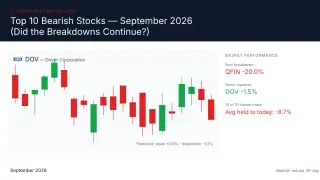
A technical analysis basket tracking the ten most bearish stock setups identified on September 1, 2026 produced consistent downside over the following 30 days, with all 10 names closing lower and an average decline of 8.7%. The screener identified deteriorating trends and weak momentum signals that proved prescient, with China Finance Online (QFIN) posting the steepest loss of -20% while industrial stocks like Dover and Boeing faced sustained pressure. The strategy's success rate of 10 for 10 downside closures demonstrates the reliability of multi-timeframe technical deterioration indicators.
A technical screening methodology identified deteriorating price momentum across multiple analytical timeframes on September 1st, 2026, flagging ten equities with converging bearish signals including oversold momentum indicators and weakening relative performance. The subsequent month demonstrated predictive accuracy, as every stock in the basket declined, with losses ranging from modest single-digit percentage drops to steeper double-digit slides.
The screening approach concentrated on industrial and materials sectors, where established names like a major aerospace manufacturer and construction materials producer experienced sustained downward pressure. China Finance Online emerged as the most dramatic case, losing one-fifth of its value within the observation period, while a smaller-cap industrial conglomerate proved most resistant to the predicted breakdown, declining only slightly despite matching bearish technical criteria.
Individual investors relying on technical analysis strategies may view such results as validating systematic screening approaches for portfolio positioning or risk management. Institutional traders could utilize similar methodologies for tactical allocation decisions. However, retrospective performance analysis presents inherent limitations—past indicator success cannot guarantee future results, and sector-wide pressures during this period may have contributed to outcomes independent of technical factors. Broader economic conditions affecting industrial and financial sectors would merit consideration alongside mechanical signals.