Samsung's Latest Item Tracker Offers Cross-Platform Support With Important Compatibility Notes
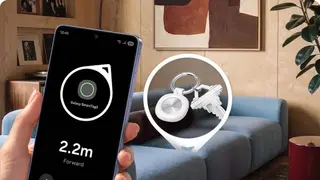
Samsung's Galaxy SmartTag3, arriving in early November 2026 at $29.99 individually or $99.99 for four units, represents a significant upgrade with 35 percent smaller dimensions and support for both Android and iOS devices. The tracker employs Bluetooth, Bluetooth 6.0 Channel Sounding, and Ultra-Wideband technology to locate items up to 60 meters away under ideal conditions, though real-world performance may vary. Potential buyers should verify their phone model supports the necessary technologies and understand that attachment security and water resistance features require proper usage to ensure safety.
Samsung's third-generation SmartTag represents a meaningful step forward in miniaturization and platform reach. The device's reduced footprint and weight make it practical for attaching to everyday items that travelers and commuters regularly misplace. The addition of iOS compatibility broadens its appeal beyond Samsung's ecosystem, though directional finding capabilities remain restricted to select recent Galaxy models equipped with specific wireless technologies.
The tag's effectiveness depends heavily on infrastructure Samsung has built through its device network. Rather than relying on cellular signals or satellite positioning, the SmartTag3 leverages proximity to hundreds of millions of participating Galaxy devices to crowdsource location updates. This networked approach works well in populated areas but offers unpredictable coverage in rural or isolated locations, making it suitable for certain use cases while presenting limitations others may find problematic.
The SmartTag3 could influence consumer behavior around item security and travel preparation by offering a low-cost safety net for frequently lost belongings. Its cross-platform support may accelerate adoption among mixed-device households. However, the tracker's dependence on a proprietary network and real-world performance uncertainties suggest it functions best as a convenience tool rather than a reliable recovery solution, potentially reshaping expectations about what personal technology can realistically guarantee.