Moroccan Startup Develops GPS-Independent Drone Using AI Navigation
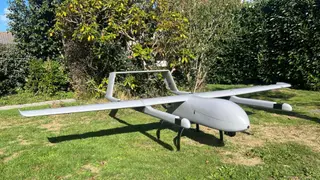
Moroccan company Ballistic Defense System has unveiled the Matador, a prototype unmanned aerial vehicle that navigates without GPS by using cameras, algorithms, and artificial intelligence to reach its targets. The one-way attack drone relies on multiple AI agents including visual inertial odometry and map matching, which are coordinated by a Kalman filter system, making it resistant to GPS jamming and spoofing prevalent in Middle Eastern conflicts. The company developed the prototype in 18 months with $1.15 million in founder investment and emphasizes sovereignty and precision as key advantages.
Ballistic Defense System's innovation addresses a critical vulnerability in modern aerial warfare. GPS-dependent systems have become targets for electronic warfare tactics increasingly deployed across Middle Eastern theaters, where adversaries actively work to disable or mislead satellite-guided weapons. The Matador's alternative approach employs layered AI systems that process visual data and inertial measurements simultaneously, with a central decision-making algorithm synthesizing inputs to maintain accuracy without external signals.
The company's rapid development timeline and modest funding reflect a lean startup approach to defense technology. By emphasizing software sophistication over expensive hardware components, the Moroccan firm has created a pathway for nations and organizations to develop indigenous drone capabilities without dependence on foreign technology providers or infrastructure.
The emergence of GPS-independent drone technology may reshape military procurement strategies, particularly for nations in regions prone to electronic warfare or those seeking to reduce reliance on foreign systems. Such capabilities could influence regional power dynamics by lowering technical barriers to advanced UAV development. The technology's availability may also affect civilian and commercial applications in areas with poor GPS reliability. However, wider adoption of autonomous systems without external navigation dependencies raises broader questions about oversight, attribution, and international security frameworks governing unmanned weapons.