Game Design Feature Explores the Enduring Legacy of Oversized Stationary Boss Battles
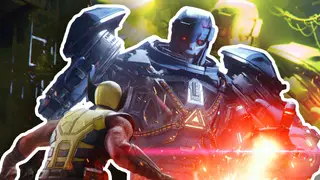
A design expert discusses the "high chair boss" archetype—a gaming convention where a massive, stationary enemy fills the screen—which has been a staple since early titles like Metroid and remains popular in modern games like Marvel's Wolverine and Final Fantasy XVI. The term itself is newly popularized, despite the design pattern existing for over thirty years across countless major releases. The feature examines whether this well-worn formula still holds novelty and what evolution it might undergo in future game design.
The "high chair boss" design pattern has dominated gaming for over three decades, yet lacked an official terminology until recently. This archetype—featuring a colossal, immobile antagonist that dominates the screen—appeared in foundational titles like Metroid and Contra, and continues appearing in contemporary releases across multiple genres and studios. The naming gap existed despite the pattern's ubiquity because it represents a gaming-exclusive phenomenon, unlike other boss archetypes derived from established storytelling traditions.
Game designers favor this format because it serves multiple technical and creative purposes. The stationary positioning allows developers to precisely calibrate difficulty by adjusting arena size relative to the boss's attack range, while the fixed visual focus enables spectacular effects and readable attack patterns. Additionally, the design scales effectively for multiplayer environments, particularly in MMO structures where large arenas accommodate multiple players against single targets.
This design analysis may interest game developers seeking to understand established conventions and their creative limitations, potentially influencing how studios approach boss encounter design moving forward. Industry professionals and educators could use this framework to teach game design principles more systematically. For players, recognizing design patterns might deepen appreciation for how games communicate challenge through visual and spatial mechanics, though mass audiences may find the technical discussion tangential to their gameplay experience.