GPU Acceleration Drives Efficiency for Large Language Model Inference
Graphics processing units are becoming essential for accelerating large language model inference on consumer devices through parallel matrix computation capabilities. The article introduces key performance metrics—time to first token and inter-token latency—that define user experience in LLM applications like AI-powered search and text prediction. GPU architectures based on designs like PowerVR provide the computational horsepower required to run demanding transformer networks efficiently.
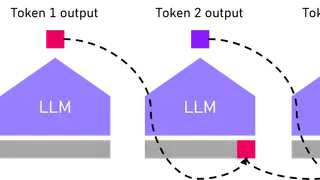
Large language models operate through transformer networks that process sequences of tokens to predict subsequent outputs. The computational foundation relies on matrix operations that are inherently parallelizable, making GPU acceleration particularly suited to this workload. Modern inference employs key-value caching techniques to store intermediate computations, preventing redundant processing and maintaining relatively consistent execution speeds as longer outputs are generated.
The inference process divides into two operational phases with distinct performance characteristics. The prefill phase processes the entire input prompt and establishes the cache through computationally intensive matrix-matrix multiplications. The decode phase then generates tokens sequentially using cached results, reducing computational requirements significantly and shifting the performance bottleneck from raw compute throughput to memory bandwidth efficiency.
GPU acceleration for language model inference could democratize access to advanced AI capabilities on consumer devices, reducing dependence on cloud computing infrastructure. This development may affect device manufacturers' hardware design decisions and influence user experience across search, productivity, and communication applications. However, broader implications remain uncertain—including energy consumption patterns, the competitive landscape of edge versus cloud AI processing, and how efficiently these optimizations translate to practical consumer applications across diverse device categories.