Record-Early Corn Harvest in Southwest Iowa Reveals Inconsistent Yields Across Region
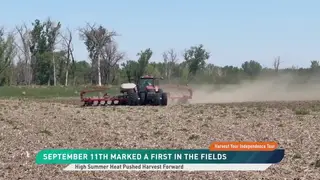
Farmers in southwest Iowa began harvesting corn in early September, marking the earliest start on record despite planting later than usual, driven by accumulated heat units and a hot, dry August. Early yield results show significant variability across fields, with some areas producing around 225 bushels per acre while others underperformed on sandy soils vulnerable to heat stress. Overall 2026 corn yields are expected to match or fall slightly short of the previous year's harvest.
Southwest Iowa's corn harvest began in early September 2026, breaking historical records for earliest start despite farmers delaying their planting into mid-April. The phenomenon resulted from accumulated heat units throughout the growing season combined with an exceptionally hot and dry August that accelerated crop maturation. Modern corn hybrids proved more resilient to these conditions than varieties from decades past, though lower plant populations from cool post-planting temperatures reduced overall stand counts compared to historical averages.
Yield performance across the region has demonstrated considerable inconsistency, with harvested fields ranging from approximately 225 bushels per acre to significantly lower outputs on vulnerable sandy soils. Fields planted later in the season benefited from timely rainfall during the critical pollination period, helping preserve yield potential. Overall, 2026 corn production is anticipated to perform comparably to the previous year rather than exceed it, though recent precipitation and subsequent harvest delays may still influence final results.
This harvest pattern could affect regional grain markets and commodity prices depending on final yield tallies, potentially influencing farmer profitability and agricultural lender assessments. The variability in yields may prompt agricultural researchers to examine heat-stress adaptation strategies for vulnerable soil types. Additionally, the record-early harvest timeline could reshape planting and harvest schedules for future seasons if similar climate conditions recur, potentially affecting equipment availability, labor demand, and storage infrastructure across agricultural communities.