Innovative protective textile boosts strawberry production while reducing pesticide needs
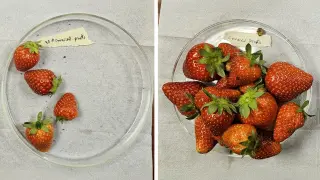
North Carolina State University researchers developed a three-dimensional fabric called Plant Armor that, when placed over strawberry plants, increased yields by up to 3.56 times in field trials. The textile barrier blocks insects while allowing sunlight, rain, and air circulation to reach the plants, and it creates a warming effect that helps plants reach the fruiting stage earlier. The technology could reduce farmers' reliance on pesticides and water while maintaining plant health.
Plant Armor represents an unexpected application of materials science research originally developed for military purposes. The three-dimensional knitted fabric functions through a permeable structure that simultaneously blocks insect access while maintaining optical transparency—allowing photosynthetically active radiation to penetrate unimpeded. The textile's thermal properties accelerate plant development by accumulating heat energy, enabling strawberries to progress through growth stages faster than unprotected crops.
The technology addresses multiple agricultural challenges simultaneously. By creating a physical barrier against pests, farmers may substantially decrease pesticide applications while achieving dramatically higher fruit yields. The fabric's porosity preserves natural water and nutrient cycles, avoiding the resource constraints that often accompany intensive crop protection methods. These characteristics suggest potential applicability across other vulnerable produce categories beyond strawberries.
Plant Armor could reshape strawberry cultivation economics by reducing input costs—particularly pesticide purchases and water consumption—while substantially increasing marketable yields. Regional farming operations in North Carolina and similar climates might adopt the technology to improve competitiveness and sustainability metrics. Agricultural suppliers and textile manufacturers could see new business opportunities. Consumers might benefit from produce grown with fewer chemical treatments, though widespread adoption would depend on manufacturing scale, durability data, and cost-effectiveness comparisons with conventional protection methods.