Rare footage captures apparent mourning behavior in humpback whales
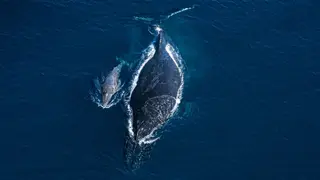
Marine researchers documented what may be the first detailed observation of a humpback whale attending to her dead newborn calf off the Australian coast. The mother repeatedly dove to the seafloor to view the deceased calf and made vocalizations, suggesting behavior similar to grieving observed in some toothed whale species. This sighting is exceptionally rare because baleen whale calves typically sink to the seafloor, making such interactions difficult for humans to witness.
Humpback whales maintain close relationships with their calves for approximately twelve months before the young animals mature into independence. The discovery of this maternal behavior toward a deceased offspring is particularly significant because baleen whale calves lack sufficient fat reserves to remain buoyant after death, causing them to sink rapidly to the ocean floor. This natural process has historically prevented scientists from observing such interactions, making the documented incident off Queensland's coast an exceptionally rare window into baleen whale behavior following loss.
The research team, led by marine biologist Olaf Meynecke and rescue captain Andrew Mulville, documented the female whale repeatedly descending to the seafloor over multiple days to maintain visual contact with the stillborn calf. Vocalizations were recorded during these visits, and the mother was observed placing her pectoral fin across the body—behavioral patterns that researchers suggest may parallel grief responses documented in toothed whale species like orcas, though scientists emphasize the need for caution in interpreting animal cognition.
This observation may influence how marine scientists study cetacean emotional responses and social structures, potentially informing conservation strategies that account for complex whale social bonds. The findings could enhance public understanding of whale intelligence and family dynamics, potentially affecting marine protection policies. However, researchers caution against over-interpreting these behaviors through human emotional frameworks, noting that whales experience their environments in fundamentally different ways than humans do.