Veterans Rally Against Proposed Trump Monument Near Arlington Cemetery
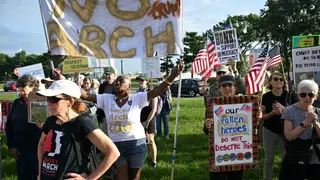
Military veterans, lawmakers, and activists gathered near Arlington National Cemetery to oppose President Trump's planned 250-foot triumphal arch, arguing it would disrupt the memorial landscape and lacks proper congressional authorization. Critics contend the project prioritizes Trump's legacy over honoring service members and would interfere with the historic sightline between the Lincoln Memorial and Arlington. The protest accompanies ongoing federal court litigation challenging the arch, which Trump has recently announced would also serve as a military facility.
The proposed structure would occupy Memorial Circle, a location strategically positioned between two of America's most significant monuments. The Lincoln Memorial and Arlington National Cemetery share a deliberate visual alignment that has existed for generations, and critics argue this new construction would fundamentally alter that relationship. The legal dispute centers on whether existing federal law regarding commemorative works requires explicit congressional authorization before such a project can proceed, a question currently being litigated in federal court.
Interior Department officials have moved to advance preliminary excavation despite ongoing regulatory reviews, prompting veterans and their legal representatives to seek emergency court intervention to halt work. The administration has countered that the structure serves legitimate purposes related to military commemoration and national anniversary celebrations, while also announcing the arch would incorporate functional military infrastructure.
This dispute could influence how the federal government approaches future monument construction near protected historical sites and memorial spaces. Veterans and their families may feel their relationship to sacred burial grounds and symbolic landscapes is at stake, while policymakers and courts must weigh competing claims about constitutional authority, historical preservation, and appropriate commemoration. The outcome could establish precedent regarding congressional oversight of executive monument initiatives and may affect public confidence in how major national symbols are authorized and positioned.