Chemical Analysis Reveals Northern Artisans Migrated to Tampa Bay, Bringing Pottery Traditions
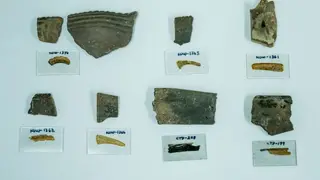
Analysis of 58 pottery fragments from Tampa Bay by the Florida Museum of Natural History suggests that Mississippian-style decorated ceramics were made locally by migrant artisans rather than imported from the Mississippi River Valley. The decorated pottery combined northern production techniques with local clay sources, indicating that craftspeople relocated to the coastal Safety Harbor culture and adapted their inherited skills. The research resolves a century-long debate about how Mississippian cultural traits appeared in a region focused on marine rather than agricultural resources.
The study employed petrography, a microscopic technique that allows researchers to examine the mineral composition and material inclusions within pottery samples. By slicing pottery fragments to near-transparent thinness and viewing them under polarizing microscopes, scientists could identify the specific materials potters added during production, including whether they reused broken vessels from previous batches.
The research focused on distinguishing between decorated and plain pottery types recovered from Tampa Bay archaeological sites. Decorated vessels showed sophisticated production methods consistent with Mississippian practices, while plain pottery employed simpler molding techniques. The presence of recycled pottery fragments in 80 percent of decorated samples—but none in plain vessels—provided critical evidence that different groups of craftspeople used distinct material traditions.
The findings may reshape how archaeologists understand cultural movement and adaptation in pre-Columbian North America. By demonstrating that artisans physically relocated rather than simply trading goods, the research could influence broader interpretations of how indigenous populations responded to environmental and social changes. This work may also emphasize the importance of chemical analysis in resolving archaeological questions that visual examination alone cannot answer, potentially encouraging investment in laboratory techniques for future investigations.