Hurricane Season Deals Significant Blow to Hawaii Economic Projections
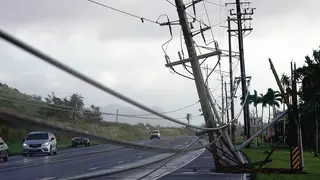
Multiple natural disasters in Hawaii during 2026 are expected to severely impact state economic growth, which forecasters now predict will reach only 0.6 percent after inflation adjustment, down from 3.3 percent in 2025. This projected slowdown marks the weakest economic performance since the 2020 COVID-19 contraction and represents nearly $1 billion in reduced economic output for the state. The decline follows damage from Kona-low storms and Hurricanes Lala and Lowell, which caused widespread destruction across the islands.
Hawaii's economy is experiencing a dramatic reversal in fortunes, with forecasters at the University of Hawaii predicting growth will slow to less than one-fifth of the previous year's rate. The state has endured an unusually severe sequence of weather events and seismic activity throughout 2026, including multiple storm systems, two major hurricanes, and an earthquake that collectively damaged thousands of homes and critical infrastructure. Governor Josh Green's office has already identified preliminary repair costs exceeding $686 million, with additional damage anticipated from an approaching tropical system.
Energy price inflation, partly driven by international geopolitical conflicts, has compounded the economic strain alongside the physical destruction from natural disasters. The convergence of these factors has pushed Hawaii's economic outlook to its lowest point since the pandemic-induced contraction of 2020.
The projected economic contraction could strain state budgets for disaster recovery and may affect public services, employment, and business investment across Hawaii. Tourism-dependent sectors may face prolonged weakness as visitors postpone trips during hurricane season. Residents and businesses reliant on state recovery assistance could face lengthy reconstruction timelines, potentially widening economic disparities. Rising energy costs may persist beyond the immediate disaster period, creating sustained pressure on household budgets and operational expenses across the islands.