Power giants Constellation and Vistra navigate FERC's suspension of grid reliability funding
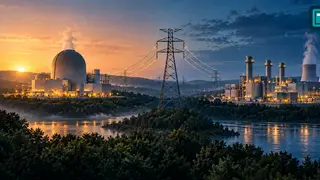
FERC suspended PJM's reliability-backstop procurement for five months, but did not cancel existing bilateral power contracts between Constellation and Microsoft or Vistra and Meta. Vistra holds an advantage with 83.4% of its 2,609 MW Meta contract already supplied by operating nuclear plants, while Constellation's Microsoft agreement depends on restarting its Crane facility. The delay shifts focus to which company can better capitalize on its existing contracted capacity.
The Federal Energy Regulatory Commission's decision to pause PJM's reliability procurement program for five months creates a critical juncture for nuclear power operators competing for data center contracts. Rather than canceling existing agreements with major tech firms, the agency's action simply delays a separate purchasing mechanism, leaving bilateral power deals intact. This distinction matters significantly: companies with generating capacity already online can fulfill their obligations immediately, while those dependent on restarting dormant facilities face timing uncertainty.
Vistra enters this period from a stronger operational position, with the majority of its Meta contract already being supplied by functioning reactors. Constellation must navigate the more complex challenge of bringing its Crane facility back online to meet its Microsoft commitments. The regulatory delay essentially tests which company can execute its deployment strategy faster, making near-term operational capability a competitive advantage in securing tech sector power partnerships.
The FERC decision may influence how technology companies evaluate nuclear power reliability for AI infrastructure buildouts, potentially favoring vendors with immediately available capacity over those with development timelines. Regional grid operators could face pressure to demonstrate that existing bilateral contracts sufficiently address reliability needs, which may reshape future procurement approaches. The outcome could signal to investors and policymakers whether established nuclear operators or those undertaking facility restarts better serve the emerging demand for stable, large-scale power supply to data centers.