Democrats flip 13 state legislature seats in special elections during Trump's second term
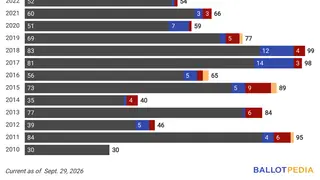
Since January 2025, Democrats have gained a net 13 state legislative seats in special elections, all previously held by Republicans, while Republicans have not captured any Democratic-held seats. The gains, achieved in Mississippi, Florida, Iowa, Pennsylvania, Arkansas, Georgia, New Hampshire, and Texas, resulted in Republicans losing supermajority control in the Mississippi and Iowa state senates. These special election results mark a significant shift, with Democrats' vote margins improving by an average of 5.1 percentage points across competitive districts compared to the previous general elections.
Since President Trump's second term began in January 2025, Democrats have achieved notable success in state-level special elections, capturing 13 seats previously held by Republicans without losing any Democratic-held seats in return. These victories occurred across eight states, with particularly significant consequences in Mississippi and Iowa, where Republican majorities in state senates were weakened enough to eliminate their supermajority status.
The Democratic performance in these contests has improved substantially compared to recent general elections. In competitive districts where both parties fielded candidates in both the special and prior general elections, Democratic margins shifted an average of 5.1 percentage points in their favor. This represents a meaningful reversal compared to Trump's first term, when Democrats gained 19 special election seats over two years.
These special election results may signal shifting voter sentiment in Republican-held districts, potentially affecting legislative agendas and priorities in affected states. The loss of supermajorities in Mississippi and Iowa senates could impact Republicans' ability to pass legislation without Democratic support in those chambers. However, Republicans maintain substantial overall control of state legislatures nationwide, holding over 55 percent of seats, so the impact remains geographically limited and may not substantially alter Republican legislative dominance nationally.