Irish and British Aerobatic Teams Perform Historic Joint Formation Flight
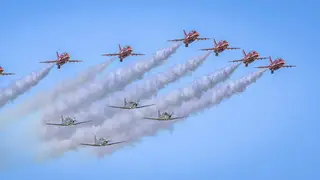
The Irish Air Corps' Silver Swallows and the Royal Air Force's Red Arrows flew together in formation at RAF Waddington on September 26th, marking what appears to be the first publicly documented joint display by the two national aerobatic teams. The combined flypast featured the Red Arrows' distinctive red BAE Hawks alongside the Silver Swallows' PC-9M trainers, generating significant interest among aviation enthusiasts. The Silver Swallows, re-established in 2022, continue their tradition of representing the Irish Air Corps on the international airshow circuit.
The Silver Swallows represent a revival of Irish military aviation heritage. Originally flying Fouga Magisters throughout the 1980s and 1990s, the team earned international acclaim before disbanding when the aircraft were retired in 1998. The modern squad, reestablished during the Air Corps' centenary in 2022, operates Pilatus PC-9M trainers and draws its pilots from the Flying Training School at Casement Aerodrome. This dual role—serving as display ambassadors while training future military aviators—allows the team to balance professional development with public engagement across European airshows.
The Red Arrows, permanently based at RAF Waddington, maintain their status as one of the world's most recognized military display teams through consistent international appearances. The September 26th joint formation represented a symbolic gesture between neighbouring air forces, particularly significant given Ireland's military neutrality. Such cooperative aviation displays, while not involving combat operations, strengthen professional relationships and demonstrate shared commitment to airmanship standards and safety protocols across air arms.
This event may hold modest significance for aviation tourism and military public relations, potentially boosting attendance at future international airshows featuring either team. For aviation professionals and enthusiasts, the display could reinforce interest in military training programmes and aerobatic excellence. The cooperation might also signal to policymakers broader possibilities for standardized training partnerships and air safety coordination between European nations, though without altering Ireland's neutral status or defense commitments.