Malaysia's Wholesale 5G Operator Secures Long-Term Spectrum as Grameen Telecom Enters Digital Payments
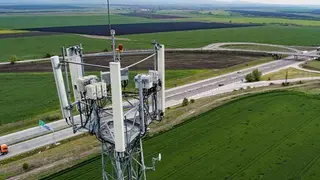
Malaysia's Digital Nasional Berhad obtained a 15-year spectrum assignment and closed RM5.2 billion in Islamic financing, strengthening its wholesale 5G network with 200 MHz of mid-band spectrum and a clearer ownership structure transitioning to major operator control. Grameen Telecom launched gpay, a digital payment platform in Bangladesh supporting merchant transactions, remittances and financial services as telecom operators increasingly diversify into fintech. Sterlite Technologies secured approximately $1.2 billion in supply contracts through 2030 for optical-connectivity products to an international hyperscale customer.
Malaysia's wholesale 5G infrastructure operator has moved closer to financial and operational sustainability through two concurrent developments. The 15-year spectrum grant provides long-term certainty for network planning, while the Islamic financing package—exceeding five billion ringgit—reduces dependence on government capital contributions. The ownership restructuring toward equal stakes among three major telecom operators signals a shift toward industry-led governance of shared 5G infrastructure.
Meanwhile, telecom operators in developing economies are extending their business models beyond connectivity services. Grameen Telecom's entry into digital payments reflects broader industry trends as carriers leverage existing customer bases and mobile distribution networks to capture value in fintech ecosystems, particularly in markets where banking infrastructure remains fragmented.
These developments may affect infrastructure investment patterns and competitive dynamics differently across regions. Malaysia's spectrum clarity and financing could accelerate 5G deployment and reduce service costs for operators and consumers. Grameen's fintech expansion may improve financial inclusion in Bangladesh by combining telecom reach with payment services, though it also concentrates financial services power among telecom incumbents. India's optical-supply contract reflects growing demand for data-center connectivity driven by cloud and AI expansion, potentially benefiting manufacturing sectors in emerging economies but requiring sustained technological capability.