Documentary About Oyster Farms Premieres at London Film Festival With Haunting Environmental Vision
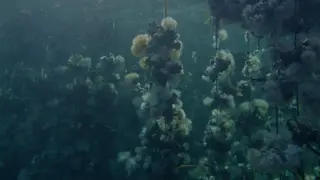
Directors Jessica Johnson and Ryan Ermacora's experimental documentary uses striking cinematography by Jeremy Cox to explore oyster farms in British Columbia, presenting environmental degradation through immersive sensory imagery rather than conventional explanatory methods. Shot on 35mm film, the project world premiered at Hot Docs and will screen in the BFI London Film Festival's documentary competition starting October 11. The film combines natural beauty with ecological dread, using sound design by musician Scott Gailey to create a multi-layered cinematic experience about climate change.
The film employs 35mm cinematography to examine oyster cultivation on Canada's Discovery Islands, where the slow biological timeline of shellfish development contrasts sharply with rapid environmental deterioration. Rather than relying on traditional documentary conventions like data visualization or narrator exposition, the project prioritizes sensory immersion through visual composition and specially designed soundscapes. This approach positions the oyster farm as a microcosm for understanding how human labor and industrial systems interact with planetary processes operating across vastly different temporal scales.
Johnson and Ermacora collaborated with ocean scientists to address acidification while maintaining the film's experimental aesthetic. The work specifically challenges viewers to reconsider their relationship to environmental change by moving beyond conventional analytical frameworks toward what the directors describe as "optical and auditory techniques" that create psychological and emotional distance between observer and subject, transforming abstract climate concerns into visceral cinematic experience.
The film's London premiere may influence how documentary storytellers approach environmental topics, particularly whether immersive sensory narrative could reach audiences fatigued by conventional climate communication. This experimental model could affect funding and exhibition patterns for environmental documentaries, potentially encouraging networks and festivals to support form-based innovation alongside content. However, its impact may remain limited to specialty festival circuits and cinephile audiences, with unclear implications for broader public understanding of ocean acidification and aquaculture practices.