Research Reveals Widespread Tendency for Humans to Veer Leftward While Walking
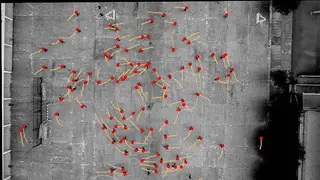
A new study demonstrates that humans exhibit a consistent counterclockwise bias in their walking patterns regardless of whether they walk alone or in groups. This directional preference appears to be a widespread behavioral trait across the human population. The discovery suggests an underlying neurological or physiological mechanism that influences human movement.
Researchers have identified a systematic pattern in human locomotion: people tend to walk in a leftward-curving direction as a baseline behavior. This preference manifests consistently across different scenarios, whether individuals navigate spaces alone or move within groups. The findings suggest this is not an anomalous occurrence but rather a characteristic shared broadly throughout human populations, indicating it stems from something more fundamental than personal habit or learned behavior.
The discovery points toward biological roots for this walking tendency. Scientists suspect the mechanism behind this directional preference involves either neurological factors related to how the brain processes movement or physiological aspects of human anatomy and balance. Understanding such inherent patterns in human movement offers insights into basic principles governing motor control and spatial navigation.
This research could have practical implications for fields including urban planning, crowd management, and architectural design, where understanding natural human movement patterns may improve safety and efficiency. For medical and rehabilitation contexts, identifying baseline movement preferences might help clinicians detect neurological abnormalities or assess recovery progress. The findings may also interest roboticists and artificial intelligence developers seeking to replicate more natural human-like movement in autonomous systems.