Russian Drone Campaign Damages Kyiv's Key Bridge Infrastructure
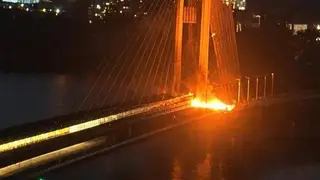
Russian drones conducted multiple strikes on Kyiv's Southern Bridge over a 24-hour period starting October 1, progressively damaging support structures, roadways, and metro tracks until authorities closed the crossing in both directions. The strikes employed Geran-4 Seeker jet-powered drones equipped with artificial intelligence targeting systems and a new cumulative-cutting warhead specifically designed to destroy bridge structures and high-voltage transmission towers. The repeated attacks forced diversion of metro and ground traffic to alternate bridges across the Dnieper River while repair assessments continued.
Russian forces have escalated strikes against Kyiv's critical infrastructure using advanced drone technology. The Southern Bridge sustained damage across multiple structural elements including support columns, roadway surfaces, and protective barriers surrounding metro tracks. Ukrainian authorities responded by closing the crossing and rerouting public transportation through alternative Dnieper River crossings, including the Metro Bridge, Paton Bridge, and the Darnytskyi and Podilskyi bridges farther south. The deployment of German-made air defense systems to the bridge represents an attempt to counter the Russian drone campaign.
The strikes employed Geran-4 Seeker drones, jet-powered unmanned systems capable of speeds exceeding 500 kilometers per hour with ranges over 850 kilometers. According to Ukrainian officials, Russia introduced a new warhead design featuring a 40-kilogram main charge with four additional strike modules specifically engineered to penetrate bridge steel structures and high-voltage transmission infrastructure.
The repeated attacks on Kyiv's bridge infrastructure could significantly impact urban mobility and essential services across the capital. Disruptions to metro operations and ground transportation may affect hundreds of thousands of daily commuters and strain alternate routes. Infrastructure damage could require extended repair timelines and substantial resources during wartime conditions. The demonstration of advancing drone capabilities and targeting systems may influence assessments of air defense sufficiency and the trajectory of the conflict's technological dimensions.