Trump Adds Drug Manufacturing Claims to Iran War Rationale Seven Months Later
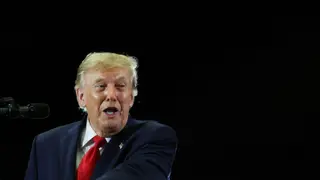
Trump introduced a new justification for the military campaign against Iran, claiming the country was operating drug factories alongside nuclear facilities, a rationale he had never previously mentioned. The statement occurred during a rally speech celebrating Operation Midnight Hammer, the June 2025 strikes on Iranian nuclear sites that preceded a broader conflict. Iran had been under international nuclear inspections and allowing continuous IAEA supervision before the attacks.
Operation Midnight Hammer, conducted in June 2025, targeted Iranian nuclear sites at Fordo, Natanz, and Isfahan. At the time of the strikes, Iran maintained an agreement allowing continuous International Atomic Energy Agency inspectors within its borders and had consistently characterized its nuclear program as serving civilian energy purposes rather than weapons development.
The conflict expanded significantly following the initial strikes. Currency collapse in Iran triggered widespread domestic protests by December 2025, which were suppressed with considerable loss of life. The subsequent closure of the Strait of Hormuz created economic consequences for the United States, contributing to rising energy prices that affected American consumers and broader economic stability.
The introduction of a previously unstated rationale for military action could impact public trust in official statements regarding foreign policy decisions. Citizens, lawmakers, and international observers may question the consistency and reliability of stated justifications for sustained military engagement. The evolving narrative might influence domestic political calculations around the war's popularity and could affect future congressional authorization debates. Economic impacts from regional instability may shape public opinion about the conflict's costs relative to its stated objectives.