October Night Sky Guide: Saturn at Opposition, Orionid Meteors, and Lunar Encounters
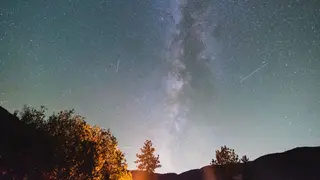
October 2026 offers several notable skywatching opportunities, beginning with Saturn reaching opposition on October 4th, which will make the ringed planet visible throughout much of the night. The Orionid meteor shower will peak on October 21-22, created by debris from Halley's Comet, though moonlight may reduce visibility of fainter meteors. Additionally, the Moon will pass near the Pleiades star cluster on October 27-28, providing another celestial viewing opportunity for the month.
Saturn's opposition in early October provides an ideal viewing window since the planet sits directly opposite the Sun from Earth's perspective, causing it to remain visible throughout the night rather than setting shortly after sunset. Recent space-based observations have added scientific intrigue to this event, with researchers discovering a newly formed ten-sided atmospheric feature at Saturn's south pole that appears to be intensifying, offering astronomers a rare chance to monitor the development of large-scale weather patterns on a gas giant.
The Orionid meteor shower, originating from material shed by Halley's Comet during its orbit, peaks mid-month but faces interference from lunar brightness. Observers seeking optimal viewing conditions should plan to watch during pre-dawn hours after moonset, when fainter meteors become visible against darker skies, rather than attempting to observe during the night's brighter periods.
October's celestial events could engage public interest in space science through accessible naked-eye observation, potentially increasing awareness of astronomy and NASA's research capabilities. The phenomenon of Saturn at opposition, combined with meteor shower peaks and lunar-stellar conjunctions, may drive attendance at planetariums and amateur astronomy club meetings. These viewing opportunities could serve educational purposes for schools and informal learning communities seeking to foster scientific literacy and interest in atmospheric and planetary science among diverse audiences.