Ocean Thermal Energy Faces Engineering Challenges Despite Technical Viability
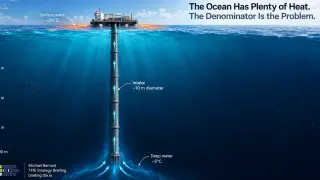
Ocean thermal energy conversion demonstrates proven capability to generate electricity by exploiting temperature differences between tropical surface water and deep ocean water, but faces significant practical constraints. The technology's low efficiency of only single-digit percentages requires processing enormous volumes of seawater—a 100 MW facility would need over 700,000 liters flowing through it every second. The massive infrastructure demands and complex engineering requirements to move and process such immense water volumes present the real barrier to commercial deployment.
Ocean thermal energy conversion harnesses a consistent natural resource: the temperature gradient between warm tropical surface waters and cold deep ocean water separated by roughly a kilometer. Historical demonstrations in Hawaii, Japan and other locations have proven the basic concept works, with engineers continuously refining system designs over decades of development.
The core constraint stems from thermodynamic principles. A heat engine operating across a 20-degree temperature difference reaches a theoretical maximum efficiency of roughly 6.7 percent, with real-world systems achieving only single-digit performance after accounting for equipment losses. This low efficiency means processing massive volumes of seawater—hundreds of cubic meters per second—just to generate modest electrical output, creating substantial infrastructure demands.
Ocean thermal energy could potentially expand electricity generation options for tropical and subtropical nations with limited fossil fuel resources, though deployment challenges may keep the technology niche rather than mainstream. If engineering solutions reduce infrastructure costs significantly, OTEC might contribute meaningfully to renewable energy portfolios in specific regions. Conversely, the high capital requirements and manufacturing scalability questions suggest alternative renewable technologies could capture similar markets more readily, potentially affecting investment priorities and climate mitigation strategies in coastal developing nations.