China Absorbs Global Oil Supply Disruption Without Public Strain
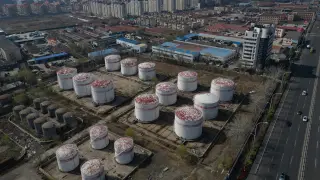
China, the world's largest crude oil importer, reduced imports to decade-low levels following February's massive global oil supply disruption in the Strait of Hormuz. Rather than competing aggressively for replacement barrels, Beijing used strategic reserves and prior infrastructure investments to insulate consumers from the crisis. The government achieved this outcome through market pressures on refiners rather than direct administrative mandates, demonstrating how decades of planning altered the economic impact points of energy shocks.
In February 2026, a major disruption to global crude supplies occurred in the Strait of Hormuz—deemed by the International Energy Agency as the most severe supply shock in market history. China, which depends on maritime routes for over 90 percent of its oil imports, responded by sharply reducing its crude purchases rather than competing aggressively for scarce barrels. By midsummer, Chinese imports had fallen to their lowest point in a decade, demonstrating the country's capacity to absorb the shock through existing infrastructure and strategic reserves.
The Chinese government's approach centered on directing the economic burden toward its refining sector rather than allowing it to spread to consumers. Officials restricted exports of refined petroleum products and raised domestic fuel price caps, implementing policy adjustments that kept public-facing price increases and supply disruptions minimal. This strategy relied partly on prior investments in electric vehicle infrastructure, which had already reduced oil demand in the transportation sector.
China's management of the oil disruption may signal how state-directed economies with substantial strategic reserves and coordinated industrial capacity could weather future energy crises differently than market-driven systems. The approach—absorbing costs within the refining industry rather than passing them to consumers—could influence how other nations structure energy security planning and reserves policy. However, this model's effectiveness may depend on specific conditions including existing infrastructure investment, domestic political stability tolerances, and the ability to sustain refiner profitability under sustained margin pressure.