Stock Market Reaches Extreme Valuation Levels Not Seen Since Dot-Com Bubble
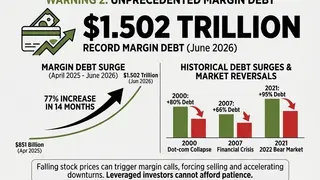
The S&P 500's cyclically adjusted price-to-earnings ratio of 41.07 represents the second-highest valuation in 156 years, exceeded only by the 1999 dot-com peak. Simultaneously, margin debt has surged to a record $1.5 trillion after climbing 77% in 14 months, mirroring borrowing patterns that preceded three previous market crashes. Investors are advised to reduce leverage, rebalance concentrated technology holdings, and maintain cash reserves to survive a potential correction.
The cyclically adjusted price-to-earnings ratio measures equity valuations by comparing current stock prices against a decade of inflation-adjusted earnings, which smooths out temporary economic swings. The metric shows the market currently trades at roughly 2.35 times its long-term average, a level approached only once before in the modern era. The previous instance, in 1999, preceded a significant technology-focused market decline that saw the Nasdaq lose nearly 78% of its value over the following two years.
Borrowed money funding stock purchases has reached unprecedented levels, with investors using leverage at rates not seen before major market downturns. When such borrowing surges precede corrections, forced selling can accelerate declines as lenders demand repayment. The combination of stretched valuations and elevated debt levels creates conditions where modest negative catalysts—missed earnings, higher interest rates, or weakened profit growth—could trigger broader selling pressure.
Extreme market valuations and high leverage levels could affect millions of retail and institutional investors, potentially triggering significant portfolio losses if sentiment shifts. A sharp correction may disproportionately harm leveraged investors who lack sufficient reserves, while cash-holding investors and forced sellers during a downturn may face difficult circumstances. Economic ripple effects could extend beyond markets if a crash prompts broader financial stress, though actual outcomes depend on trigger events and policymaker responses that remain uncertain.