Navy Awards Raytheon $24.4 Billion Contract to Increase Standard Missile-6 Production
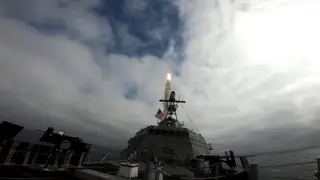
The U.S. Navy and Raytheon have signed a $24.4 billion contract spanning five years with two additional option years to accelerate production of the Standard Missile-6, a multi-purpose naval weapon system used against aircraft, ballistic missiles, and maritime targets. The agreement aims to increase manufacturing throughput, reduce costs across the defense supply chain, and provide long-term production certainty to the defense industrial base. This contract follows similar agreements with Raytheon for Tomahawk cruise missile and AMRAAM production as the Pentagon works to rebuild critical munitions stockpiles.
The Standard Missile-6 represents a cornerstone of modern naval defense capabilities, functioning as a versatile platform capable of engaging multiple threat categories across air, sea, and ballistic domains. By structuring this agreement across five years with optional extensions, the Pentagon seeks to establish production stability that allows suppliers to invest in manufacturing infrastructure and workforce development without uncertainty about future demand.
This contract follows a deliberate strategy by Department of Defense leadership to secure long-term commitments from prime contractors across multiple weapons systems. Within weeks, comparable multibillion-dollar agreements for Tomahawk and AMRAAM production demonstrate a coordinated effort to address what officials view as depleted munitions reserves and insufficient production capacity to meet strategic requirements.
This investment could affect defense spending priorities, industrial employment in aerospace and manufacturing sectors, and deterrence posture across naval operations. Sustained production commitments may enable suppliers to reduce per-unit costs through economies of scale, potentially affecting future defense budgets. The approach of using predictable demand signals to strengthen supply chains could reshape how the Pentagon structures weapons contracts, though the long-term fiscal impact and opportunity costs relative to other defense priorities remain subjects for policy debate.