New York startup deploys free home batteries to let residents run AC during peak demand
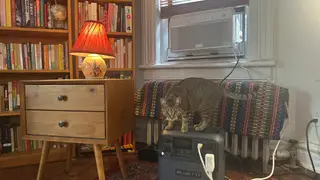
Every Electric, a New York City startup founded by Columbia University researchers, distributed household batteries to approximately 1,000 residents that allow them to power window air conditioners during peak demand periods while still earning money through utility demand response programs. Participants plug the batteries into standard outlets and connect their air conditioning units to them, enabling comfort maintenance without straining the grid during heat waves. The program uses sodium-ion battery technology and has proven effective in reducing grid load without compromising resident cooling.
Every Electric emerged from academic research into sodium-ion battery chemistry conducted at Columbia University. Founders Andrew Wang and Richard May transitioned from developing the battery technology itself to deploying it as part of a demand-response network that helps utilities manage grid strain. The company's model treats distributed household batteries as a collective resource—a virtual power plant—enabling coordinated energy management across participating residences.
The financial structure relies on minimal barriers to participation. Households can borrow batteries through a deposit system (currently $30 per unit, returnable upon device return) or purchase them outright at $650 each. The company handles remote management of charging and discharging cycles, automatically optimizing battery use during peak demand windows while residents maintain normal air conditioning comfort.
The program could benefit multiple stakeholders: residents gain free or low-cost cooling resilience during extreme heat while earning utility rebates; utilities gain flexible demand-reduction capacity without requiring behavioral sacrifice from customers; and the startup gains deployment scale for its technology. However, broader adoption would depend on whether the economics remain viable at scale, whether other cities replicate the model, and whether distributed battery networks can meaningfully reduce peak demand during severe weather events as grid stress intensifies.