Tesla Enables Emergency Disconnect for Supercharging in Safety Response
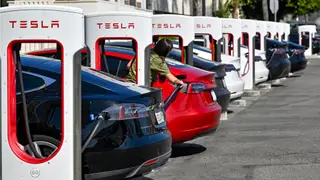
Tesla rolled out an "emergency drive away" software update that allows vehicles to disengage from charging stations and resume driving while still tethered to the connector, addressing safety concerns raised after a mass shooting at an Idaho Supercharger location in August. When activated, the feature triggers an alert requiring driver confirmation before the charging handle automatically breaks away from the vehicle. The company previously locked vehicles to charging ports to prevent operation while connected, making the new capability a significant change to standard charging procedures.
The August 2026 shooting at a Tesla Supercharger in Twin Falls, Idaho, prompted owner requests for an emergency escape mechanism while vehicles remained tethered to charging equipment. Previously, Tesla's design deliberately locked vehicles to charging ports and disabled drive mode during the charging process, requiring manual cable disconnection before departure. This software update represents a meaningful pivot in Tesla's charging safety architecture, acknowledging scenarios where drivers might need immediate mobility despite active connections.
The implementation requires driver confirmation before triggering the mechanical breakaway, which intentionally damages both vehicle and charging infrastructure to discourage casual misuse. Tesla has warned of additional penalties for deliberate abuse of the feature. This approach contrasts with third-party solutions like EVject's adapter, which attempted to provide similar functionality before becoming subject to Tesla's legal scrutiny over safety testing concerns.
The feature could expand driver confidence in public charging infrastructure by reducing perceived vulnerability during stationary charging periods. However, the requirement for confirmed damage to equipment may discourage use even in genuine emergencies if drivers worry about liability or repair costs. The measure reflects evolving considerations in vehicle design where personal safety scenarios—however statistically uncommon—influence engineering decisions. Implementation details around penalty mechanisms and damage accountability could influence adoption rates and broader industry standards for EV charging safety.