Researchers Develop Electrically-Conductive Concrete for Structural and Energy Storage Applications
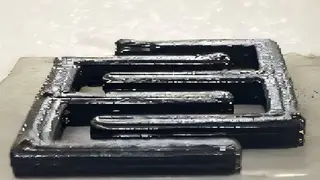
Researchers have developed a 3D-printable concrete formulation capable of storing electrical energy while maintaining its structural integrity and load-bearing properties. The dual-function material could enable buildings to simultaneously serve as structural foundations and energy storage systems, potentially integrating renewable energy systems into architecture. This innovation represents a step toward more efficient, multifunctional building materials.
This development combines two traditionally separate functions into a single building material. Concrete has long served as a foundational element in construction, valued for its durability and structural capacity. The ability to embed energy storage capabilities into this material represents a convergence of materials science and renewable energy infrastructure, potentially reducing the need for separate battery systems or auxiliary structures.
The 3D-printable aspect of this formulation adds manufacturing flexibility, allowing architects and engineers to design structures with integrated energy functionality from conception rather than retrofitting existing buildings. Such multifunctional materials could prove particularly relevant as buildings account for a significant portion of global energy consumption and waste.
If successfully commercialized, this technology could affect construction industries, building developers, and urban planners seeking to reduce environmental impact. Homeowners and facility managers might benefit from reduced energy infrastructure costs. However, widespread adoption would depend on factors including material cost, durability validation, safety standards, and comparison with existing energy storage solutions. The technology's real-world performance and scalability remain to be demonstrated in practical applications.