Trump's Rambling Interview Raises Questions About Mental Clarity
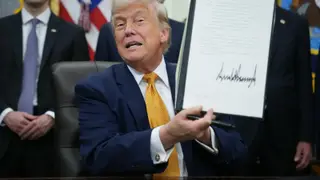
A Time magazine interview with President Trump has sparked concerns among commentators about his cognitive fitness, with his speech patterns characterized by disjointed and meandering statements. Trump has previously defended his distinctive speaking style as a rhetorical technique he calls "the weave," comparing it to free verse poetry. The interview transcripts presented in the article showcase his tendency toward stream-of-consciousness commentary on topics ranging from election results to international relationships.
A recent Time magazine interview with President Trump has prompted widespread discussion about his verbal communication patterns. The president has previously characterized his distinctive speaking style as a deliberate rhetorical approach he terms "the weave," which he compares to free verse poetry. According to his explanation from 2024, he credits English professors with recognizing this technique as innovative.
The article presents transcript excerpts from the Time interview organized thematically, including commentary on news media, international relations, and domestic infrastructure. These passages demonstrate Trump's tendency toward stream-of-consciousness expression that moves between related and sometimes tangential topics, ranging from claims about election results to assessments of specific media personalities and his role in protecting allied nations.
Questions about a sitting president's cognitive fitness could influence public confidence in executive decision-making and may affect political discussions ahead of future elections. Media outlets and commentators across the spectrum may interpret the same speech patterns differently—some as evidence of concern, others as distinctive communication style—potentially deepening existing partisan divides. How the public and political institutions respond to such concerns may shape expectations for presidential communication and medical disclosure standards going forward.