International Partnership Develops Safety Simulation for Ammonia-Powered Vessels
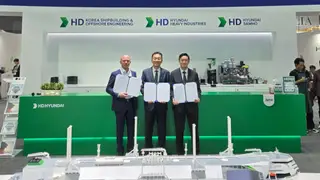
A collaborative effort between the United States, South Korea, and Germany is creating digital twin technology to detect and prevent hazardous ammonia leaks on next-generation ships. The technology uses virtual simulation models to anticipate potential safety failures before they occur in real maritime environments. This innovation addresses safety concerns as the shipping industry transitions toward ammonia as an alternative fuel source.
The shipping industry faces significant challenges as it seeks cleaner fuel alternatives to traditional marine diesel. Ammonia has emerged as a promising candidate due to its potential to reduce emissions, but its inherent hazards require robust safety measures before widespread adoption becomes viable. This international collaboration leverages computational modeling to create realistic virtual environments where potential failure scenarios can be tested and analyzed without exposing actual vessels or crews to risk.
Digital twin technology represents an advance in predictive safety engineering. By simulating ammonia systems under various operational and emergency conditions, researchers can identify vulnerabilities in ship designs and operational procedures. These insights allow engineers to implement safeguards and protocols before vessels encounter real-world hazards, making the transition to ammonia fuel more feasible for maritime operators and regulators.
This development could affect multiple stakeholder groups as ammonia gains traction as a marine fuel. Shipping companies might benefit from validated safety protocols that accelerate regulatory approval for ammonia-powered vessels. Port communities and maritime workers could experience reduced environmental exposure, though their safety during operations remains dependent on implementation effectiveness. Regulators may use this technology to establish evidence-based standards, potentially influencing global maritime safety frameworks and the timeline for ammonia fuel adoption across the shipping sector.