DAVINCI Probe Successfully Endures Venus-Equivalent Temperature Testing
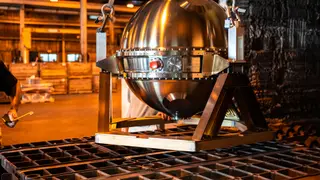
An engineering model of NASA's DAVINCI mission passed critical thermal testing by surviving temperatures of 465 degrees Celsius, matching the extreme conditions it will encounter during descent to Venus's surface. The specialized chamber heated the compact probe at the same rate it will experience during the actual mission to evaluate its durability. This successful test brings the mission closer to launch as it prepares to investigate whether Venus was once habitable.
NASA's DAVINCI mission represents a significant endeavor to unlock Venus's planetary history. The probe, roughly the size of a yoga ball, must withstand extraordinary conditions during its journey through the Venusian atmosphere and toward the planet's surface. By subjecting an engineering model to identical heating rates expected during the actual descent, researchers can validate that critical systems and materials will function properly in this hostile environment.
The thermal chamber test, conducted over nearly two weeks in late summer 2026, replicated not just the peak temperature but the precise heating timeline the probe will experience. This methodical approach to validation is essential before committing the actual flight hardware to the mission, reducing risks and increasing confidence that DAVINCI can successfully gather data about Venus's atmospheric composition and past habitability.
Successful completion of this milestone may accelerate the DAVINCI mission timeline and potentially increase public interest in Venus exploration. The mission could reshape scientific understanding of planetary habitability and atmospheric evolution, which might inform broader climate and astrobiology research. Success could also demonstrate new heat-resistant engineering capabilities with potential applications beyond space exploration. However, the mission's ultimate impact will depend on the quality of data collected during the actual Venus descent.