Pressure Sensitive Paint Technology Advances NASA Wind Tunnel Capabilities
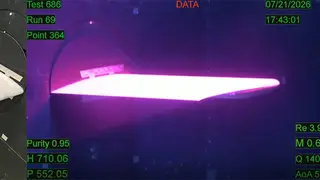
Researchers at NASA's Langley Research Center conducted pioneering tests using unsteady pressure sensitive paint to measure airflow patterns on aircraft wing models with unprecedented detail. The specialized coating illuminates under ultraviolet light to visualize how air pressure changes across the wing surface, with high-speed cameras recording the data for computer simulations. This breakthrough represents the first application of the technology on a large-scale moving model and opens possibilities for testing flexible aircraft designs that adapt during flight.
The Transonic Dynamics Tunnel at NASA's Langley facility possesses distinctive environmental conditions that made this testing milestone possible. By operating in a low-oxygen setting while accommodating large-scale models capable of free movement, the facility provided a unique platform for deploying pressure-sensitive paint technology at an operational scale previously untested. The specialized coating functions by shifting its luminosity in response to variations in air pressure distribution, with sophisticated imaging equipment documenting these light variations for subsequent computational analysis.
This advancement builds on years of collaborative research across multiple NASA centers pursuing wind tunnel integration. The benchmark wing serves as a standardized reference model rather than mimicking any single aircraft design, allowing researchers to refine simulation accuracy across diverse applications. The successful demonstration suggests the methodology could extend to testing adaptive aircraft structures designed to modify their shape during operation, potentially improving aerodynamic efficiency.
This development may influence how engineers design and validate next-generation aircraft by enabling more detailed, real-time measurement of airflow behavior during testing. More accurate wind tunnel data could accelerate the certification timeline for new aircraft designs and reduce physical prototyping costs. The methodology's potential application to flexible wing designs might particularly benefit emerging aviation sectors exploring efficiency improvements, affecting manufacturers, researchers, and eventually commercial aviation stakeholders seeking performance advantages.