Start-up Claims First Mars-Ready Microbe, but Scientists Question Claims of Terraforming Breakthrough
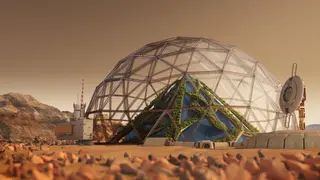
Pioneer Labs announced they have engineered the first bacterium designed for Mars by modifying Cupriavidus necator to potentially produce building materials and nutrients from Martian resources. The company's CEO promoted the organism as a foundational step toward terraforming the Red Planet, supported by promotional videos showing future self-sufficient domed habitats. However, expert evaluations from planetary scientists and bioengineers suggest the claims may be overstated, with significant questions remaining about the practical feasibility of the approach.
Pioneer Labs engineered a bacterium derived from Cupriavidus necator to function within controlled bioreactors on Mars, where it would convert Martian soil, water, and carbon dioxide into bioplastic material suitable for construction. The modification represents a narrow application rather than a comprehensive solution to planetary habitability. DeBenedictis has publicly acknowledged that this organism constitutes just one component of a planned five-organism system needed to establish self-sustaining Martian ecosystems.
The gap between promotional framing and scientific capability has drawn scrutiny from established researchers. Experts note that current synthetic biology, while advancing rapidly, remains constrained by terrestrial engineering requirements and the extreme conditions of Mars's surface environment. The distinction between confined bioprocessing systems and open-environment terraforming reflects a fundamental difference in biological feasibility and timescale.
This announcement may influence public perception of space colonization timelines and technological readiness, potentially affecting funding decisions for both commercial and governmental space programs. The skeptical expert response could shape how investors and policymakers evaluate synthetic biology claims. Meanwhile, the underlying research may contribute meaningful knowledge to resource utilization strategies for eventual human missions, even if current applications fall short of transformative terraforming ambitions.