OpenAI Pairs Custom AI Chips with AMD Processors Rather Than Nvidia CPUs in Production Deployment
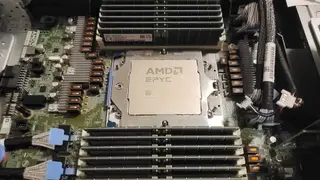
OpenAI has chosen to deploy its Jalapeño application-specific integrated circuits alongside AMD EPYC Turin processors rather than Nvidia's newer Vera CPU architecture. OpenAI's hardware leadership cited a pragmatic approach to risk management, noting that Vera lacks sufficient maturity compared to the established Turin platform and that team experience with AMD's solution was a deciding factor. Each deployment configuration includes 1.5TB of memory paired with the custom chips.
OpenAI's decision reflects a broader pattern in the semiconductor industry where production readiness often trumps theoretical performance gains. While Nvidia's newer Vera architecture claims significant benchmark advantages—up to 1.8x per-core improvements, though only 3% overall—manufacturers are increasingly cautious about unproven designs in critical deployments. AMD's EPYC Turin platform has demonstrated reliability across multiple hyperscalers and established operational frameworks.
The choice also highlights growing competition in custom silicon for AI workloads. OpenAI's Jalapeño ASIC represents a shift toward proprietary hardware optimization, with companies balancing homegrown designs against CPU selection. The emphasis on risk management over bleeding-edge performance suggests that as AI infrastructure scales, operational stability and team expertise may outweigh marginal performance metrics in enterprise deployment decisions.
This development could influence how major AI companies approach infrastructure procurement, potentially slowing adoption of newer CPU architectures even as they mature. Suppliers may face pressure to demonstrate production-grade reliability sooner rather than later. For the broader semiconductor market, the outcome suggests custom ASICs paired with proven processors may become a preferred model, affecting competitive dynamics between Nvidia, AMD, and emerging CPU makers. End users might eventually benefit through more efficient, cost-effective AI services built on pragmatic rather than cutting-edge hardware choices.