Electric Watercraft with Go-Kart Controls Offers Novel Alternative to Conventional Personal Watercraft
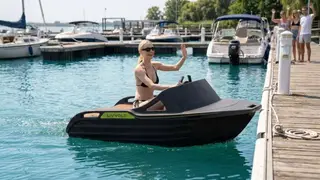
LIVVOLT has launched the Kart Boat, an electric single-seat watercraft featuring go-kart-style steering and a low cockpit design rather than the traditional saddle configuration of personal watercraft. The craft is powered by a 12-kilowatt jet drive with an estimated top speed of 25 miles per hour and runtime between 35 and 60 minutes on its removable 5.8-kilowatt-hour battery. Starting at $6,199 through Kickstarter, the boat requires independent testing to verify its performance claims and practical suitability for various water conditions.
The Kart Boat represents a departure from traditional personal watercraft by adopting an enclosed, low-slung cockpit design paired with a steering wheel rather than handlebars. This configuration, combined with a compact electric jet propulsion system, creates a driving experience intended to mimic go-kart handling on water. The craft's single-occupant capacity and 220-pound weight limit reflect its recreational, performance-oriented positioning rather than utility or passenger transport.
The machine's practicality depends significantly on user circumstances. At roughly 185 pounds fully assembled, transportation and storage logistics require advance planning and likely multiple handlers. Battery economics also factor heavily—while the removable pack design enables field swaps, a second battery costs over $2,000 and weighs as much as the hull itself, potentially limiting extended-use scenarios for budget-conscious buyers without dedicated storage and charging infrastructure.
The Kart Boat may appeal to enthusiasts seeking novelty in recreational watercraft, potentially expanding the small electric personal watercraft market. However, widespread adoption could depend on whether independent performance validation confirms manufacturer claims and whether buyers find the higher entry cost and logistical demands reasonable compared to conventional options. The model might influence future electric watercraft design toward car-like controls, though market viability remains contingent on regional water access, regulatory approval, and demonstrated reliability beyond early-adopter crowdfunding phases.